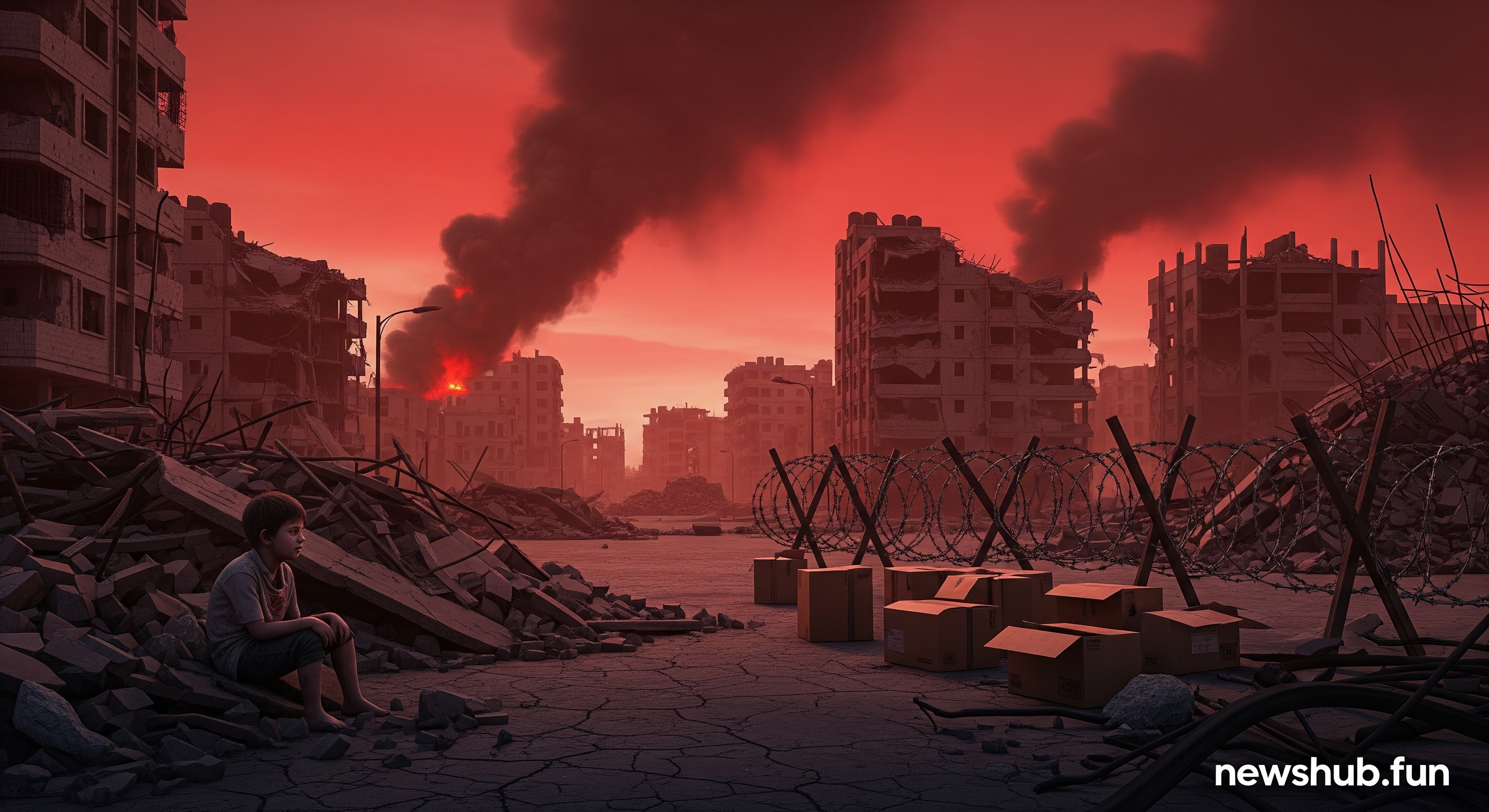
Introduction
After years of war and immense civilian suffering, the long-awaited Gaza Ceasefire Phase 01 has officially been activated. This historic agreement marks the first concrete step toward halting hostilities between Israel and Hamas. While the deal is only a preliminary phase, it holds the promise of easing Gaza’s humanitarian crisis and paving the way for a broader peace framework.
Key Points of the Phase 01 Agreement
-
Mutual Ceasefire Implementation
Both sides have agreed to a complete suspension of offensive actions for an initial 14-day period, subject to renewal after review by international mediators. This pause aims to bring an end to the immediate cycle of airstrikes, rocket fire, and ground incursions. -
Hostage and Prisoner Exchange
Hamas will release all surviving Israeli hostages, while Israel will reciprocate with the release of hundreds of Palestinian detainees, primarily women, minors, and non-combat prisoners. The exchange will be supervised by Qatari and Egyptian mediators under UN observation. -
Partial Israeli Withdrawal
Israeli Defense Forces will pull back from key urban centers inside Gaza, particularly from northern areas, allowing limited freedom of movement and humanitarian access. -
Opening of Humanitarian Corridors
For the first time since early 2024, aid trucks carrying food, medicine, and fuel will be allowed into Gaza through controlled border points. International relief agencies will coordinate daily deliveries to hospitals and refugee shelters. -
International Monitoring Mechanism
A joint monitoring committee—comprising representatives from the UN, Egypt, Qatar, and Turkey—will verify compliance and mediate disputes to prevent immediate relapse into conflict.
Humanitarian Relief at the Core
The heart of Phase 01 lies in humanitarian restoration. Gaza’s infrastructure has been shattered—hospitals barely function, clean water is scarce, and food shortages are severe. The ceasefire enables critical repairs and relief efforts.
For families in Gaza, this pause is not just a political event—it’s a brief breath of life. Electricity is being partially restored, schools are reopening for the first time in over a year, and emergency medical evacuations are underway.
However, aid workers warn that two weeks of calm cannot undo two years of destruction. Without sustained access and future phases of peace, the humanitarian crisis could quickly re-escalate.
Regional and Global Reactions
The international community has largely welcomed Phase 01 as a vital turning point.
-
United Nations Secretary-General hailed the deal as “a moment of cautious optimism.”
-
Egypt and Qatar, the key mediators, emphasized that the next step must involve political dialogue on Gaza’s governance.
-
The United States called it a “strategic humanitarian pause,” urging both sides to honor commitments.
In Israel, the deal sparked mixed reactions: families of hostages celebrated, while some hardliners accused the government of yielding to pressure. In Gaza, the streets filled with cautious cheers, though most residents remain wary of whether this truce will truly hold.
Challenges and Fragility of the Truce
Despite the optimism, numerous challenges threaten the deal’s survival:
-
Lack of trust between the two sides could cause misinterpretations or retaliations.
-
Armed factions outside of Hamas’ direct control may provoke incidents to derail peace.
-
Political divisions in both Israel and Palestine complicate the continuation into Phase 02.
-
Reconstruction funding remains uncertain, as global donors await proof of long-term stability.
Experts warn that unless a comprehensive political framework follows this humanitarian phase, Gaza may slip back into conflict within months.
What Lies Ahead: The Path to Phase 02
Phase 01 is only the foundation. The next phase is expected to focus on:
-
Complete withdrawal of military forces,
-
Formation of a transitional civil authority in Gaza,
-
Security guarantees for both sides, and
-
Massive reconstruction efforts financed through international aid programs.
If successfully implemented, Phase 02 could begin by the end of this year, marking a potential turning point in decades of Israeli-Palestinian tensions.
Conclusion
The Gaza Ceasefire Phase 01 is a fragile yet historic step. It represents a rare alignment of humanitarian urgency and political opportunity. The world watches closely as Gaza begins to heal—slowly, painfully, but with hope. Whether this fragile truce can transform into a lasting peace depends not only on leaders and mediators, but on the resilience of those who have endured the unimaginable.
.jpg)


0 Comments
No comments yet. Be the first to share your thoughts!
Leave a Reply